We drove by a place named Stewiacke, the sign for which proudly announced that it is half way between the equator and the North Pole!
I’ve never been so close to Santa’s place before. How exciting!
I wonder if he likes getting visitors…
We drove by a place named Stewiacke, the sign for which proudly announced that it is half way between the equator and the North Pole!
I’ve never been so close to Santa’s place before. How exciting!
I wonder if he likes getting visitors…
The harbour was our last stop in Halifax before heading off again.
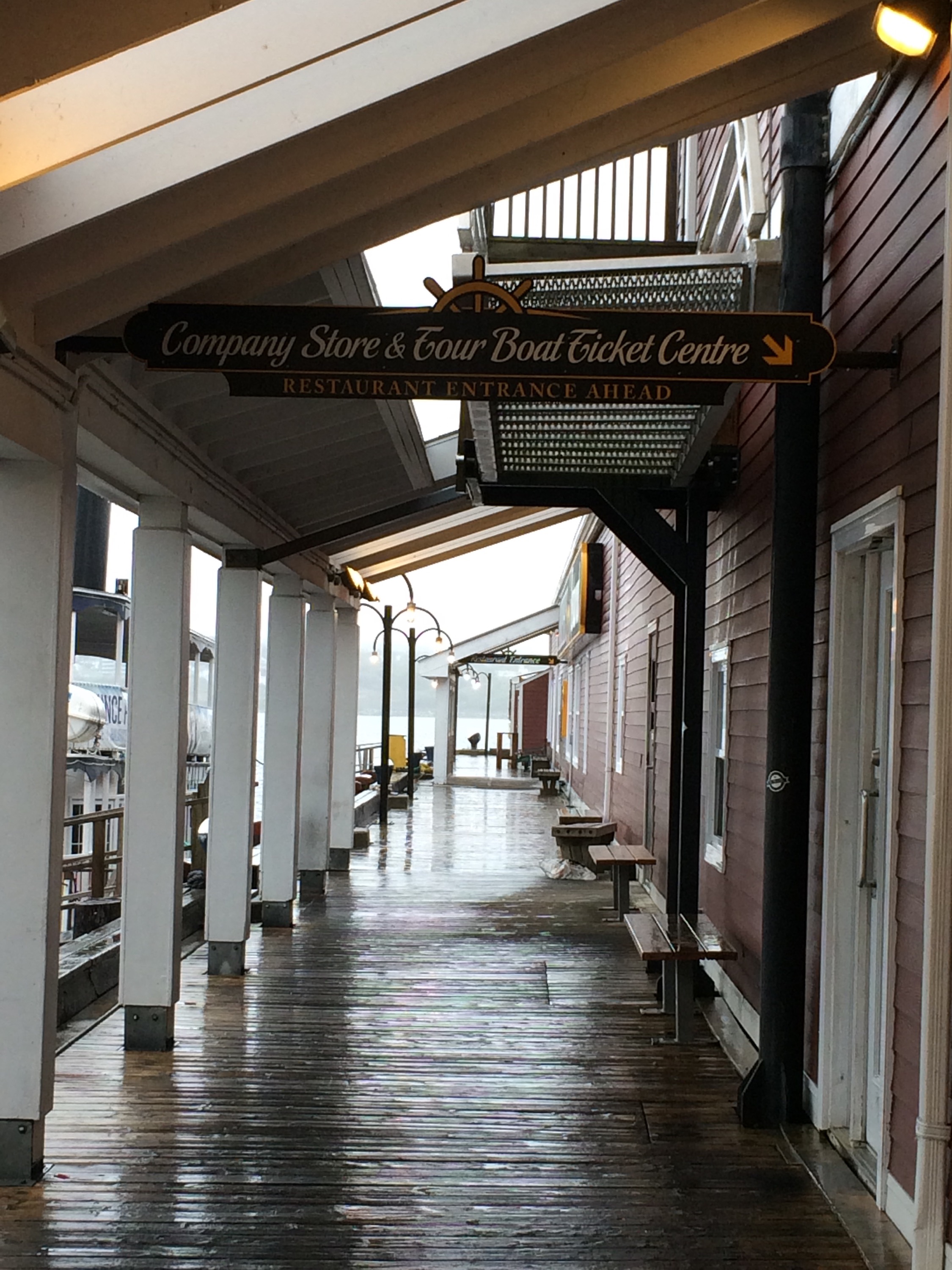
It’s very pretty once you are away from the industrial area. Sailboats, motor boats, nautical themed buildings and restaurants characterise the downtown harbour front.
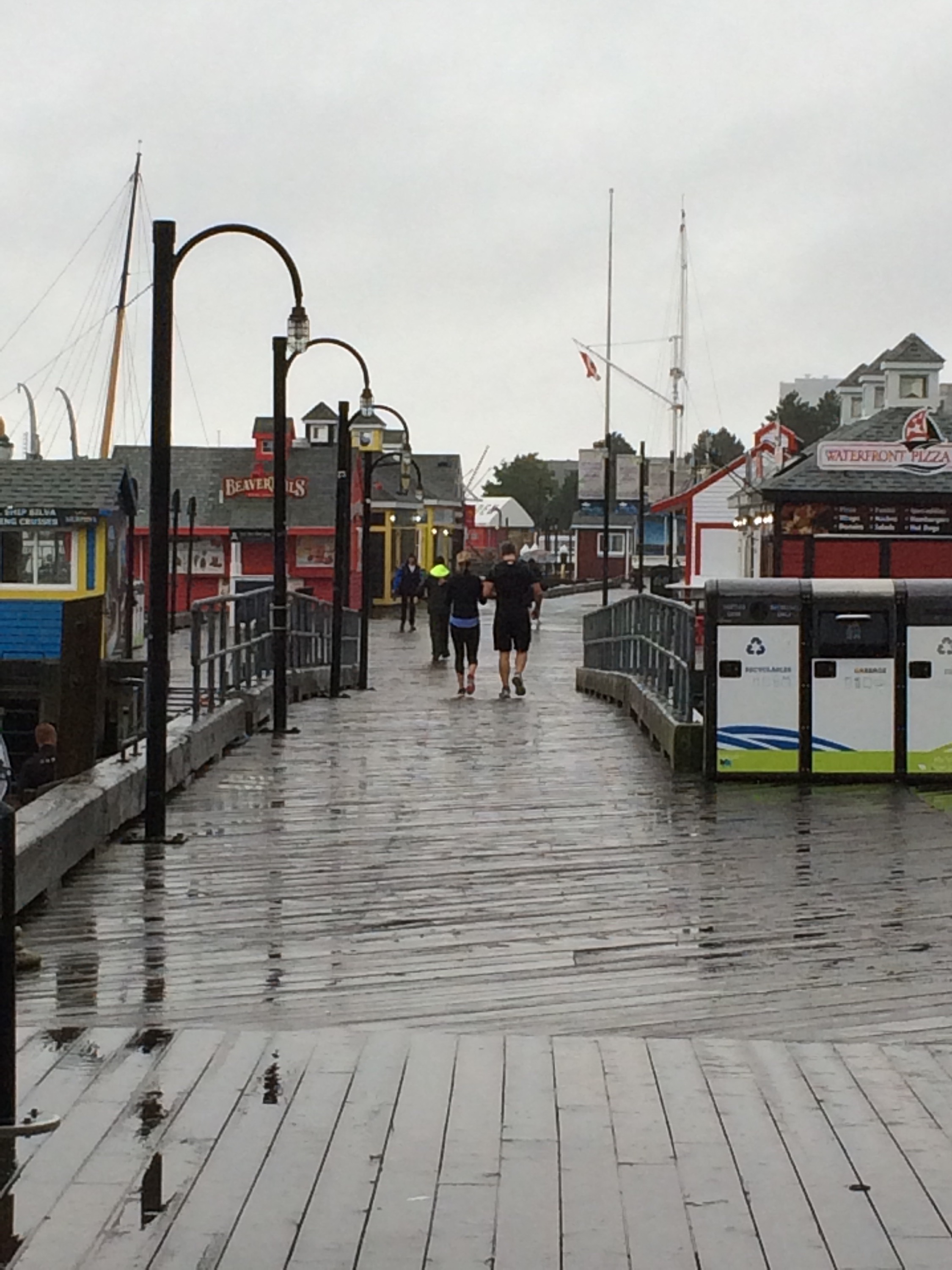
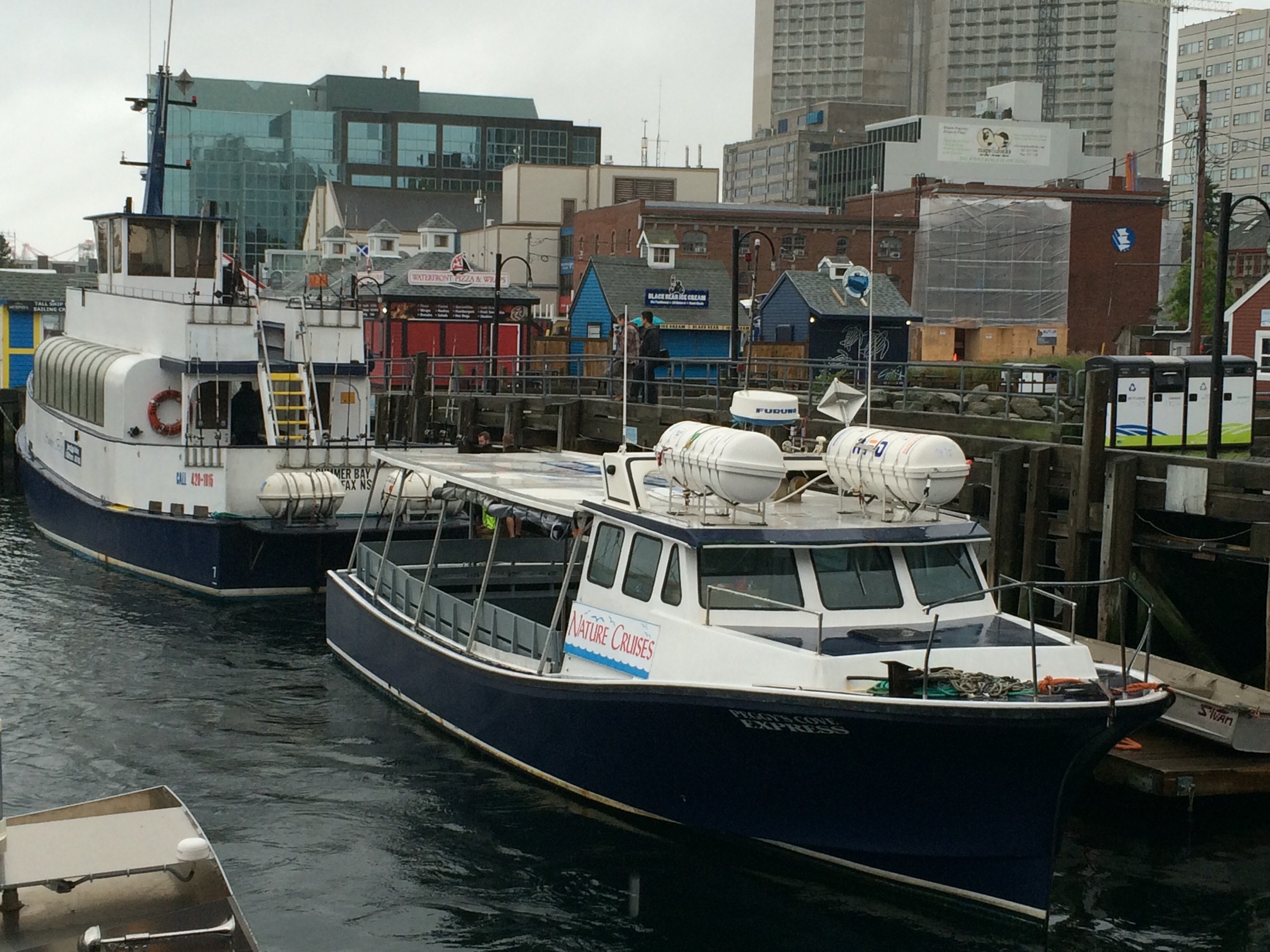
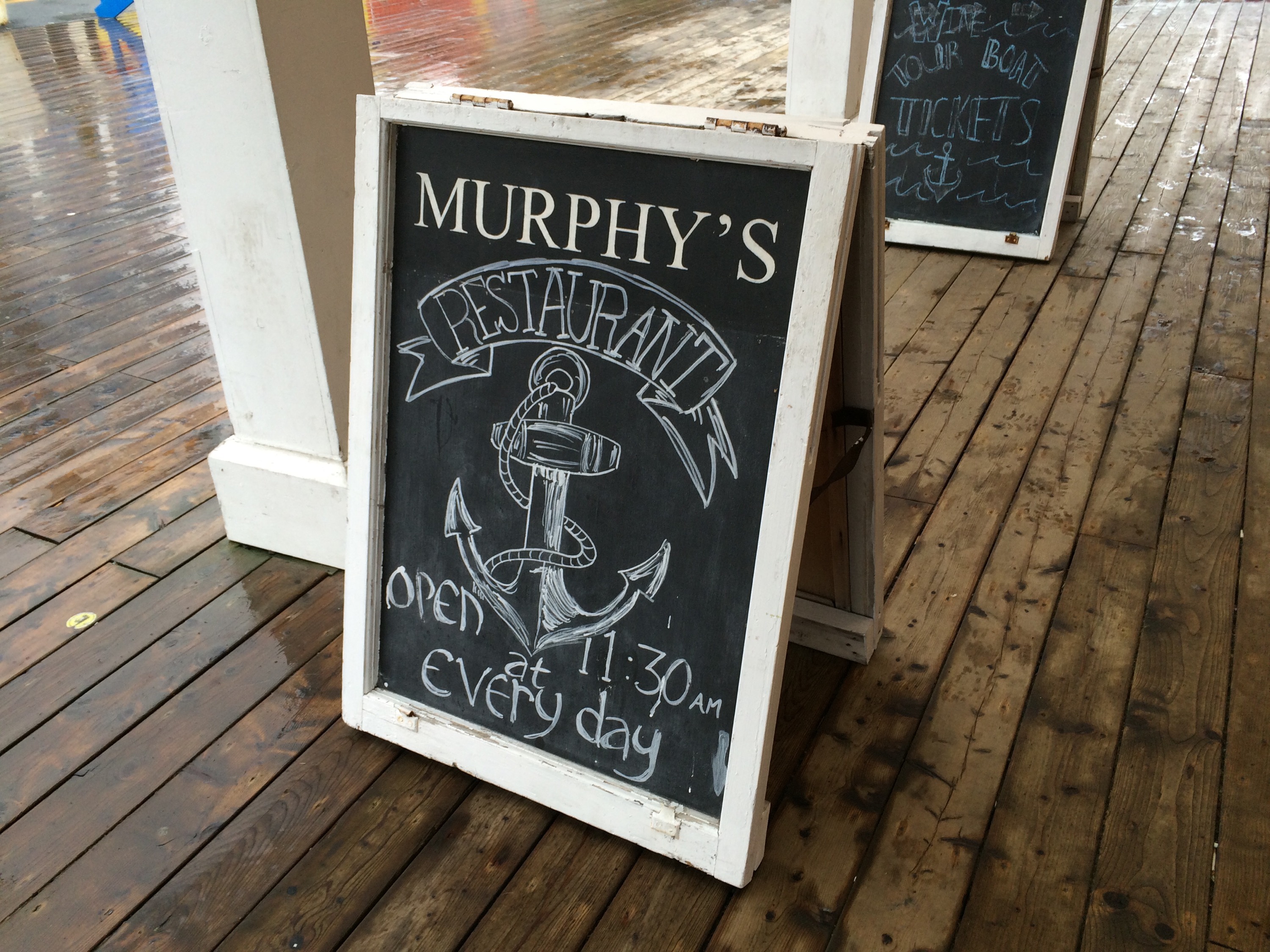
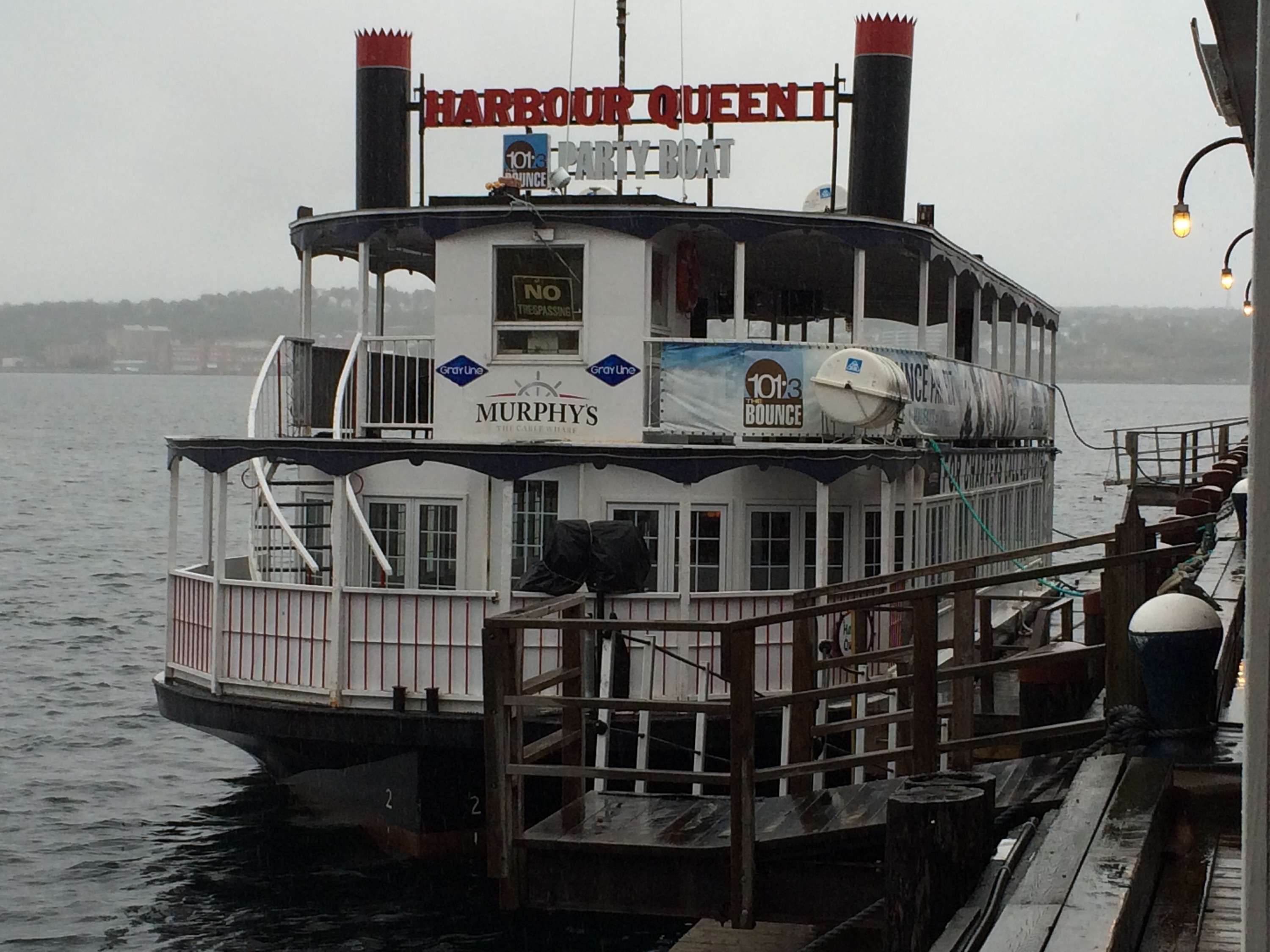
Prominent on the dock is Murphy’s restaurant – the very one we had discussed visiting last night. It looks lovely, surrounded by pier and boardwalk, and enhanced by a paddle boat moored right beside it.
We left Halifax this morning very happy with all that we had seen and done while staying there.
I’ve seen Peggy’s Cove in photographs and books many times, so it was an obvious addition to my bucket list for my visit to Canada.
We set out this morning from Halifax in misty rain, but it didn’t dampen my spirits. I observed that moody skies and a bit of rain kind of suited this part of Nova Scotia, although I’m not really sure why.
We stopped at some picturesque places along the way, enjoying the scenery provided by little bays and inlets and the vivid Autumn colours of the trees along the road. Little white churches, boats, rustic cabins, ponds and rocky outcrops provided stimulus for plenty of conversation as we drove.
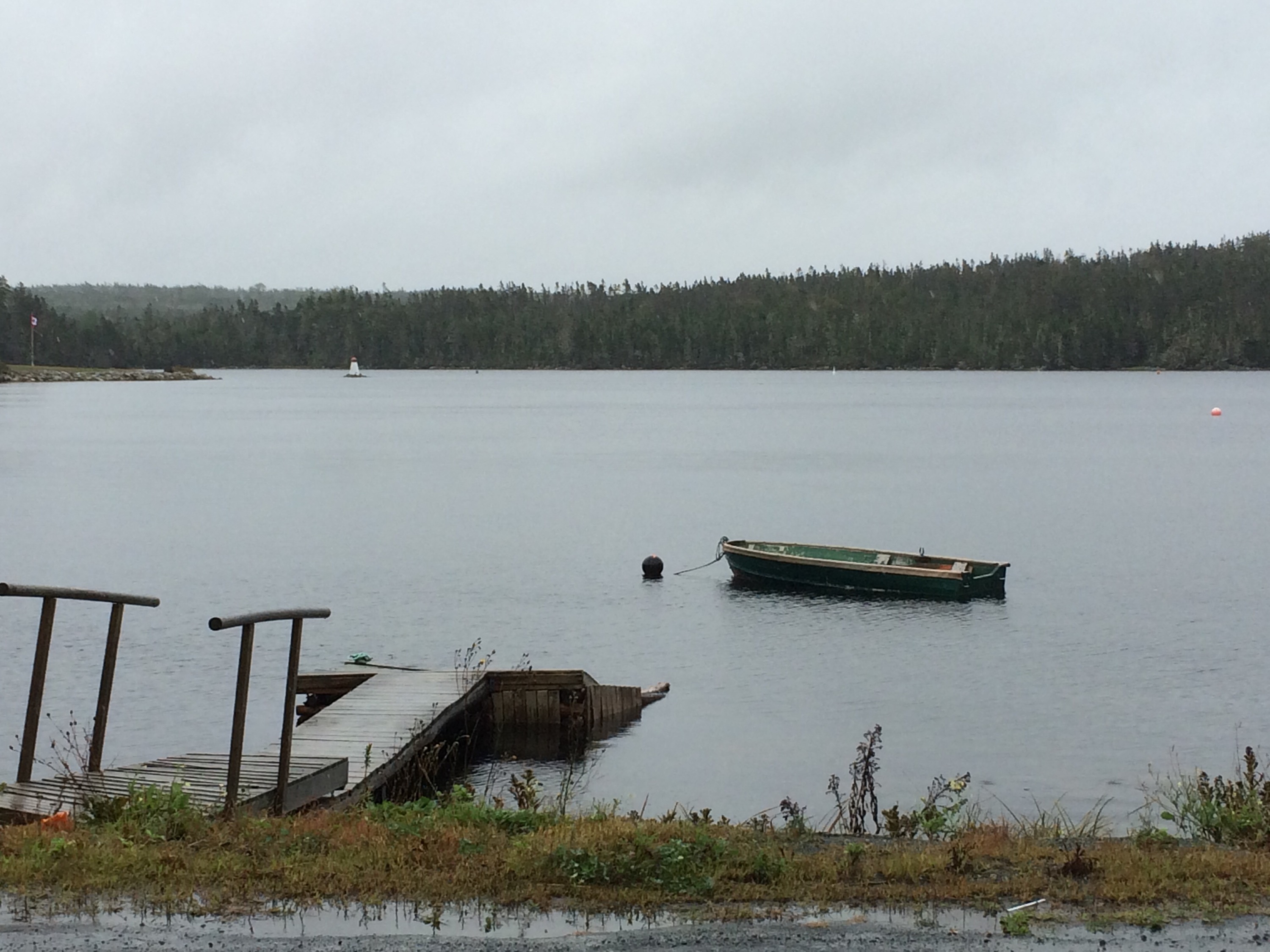 As we drove into Peggy’s Cove there were so many delightful things to see that it was hard to know where to start.
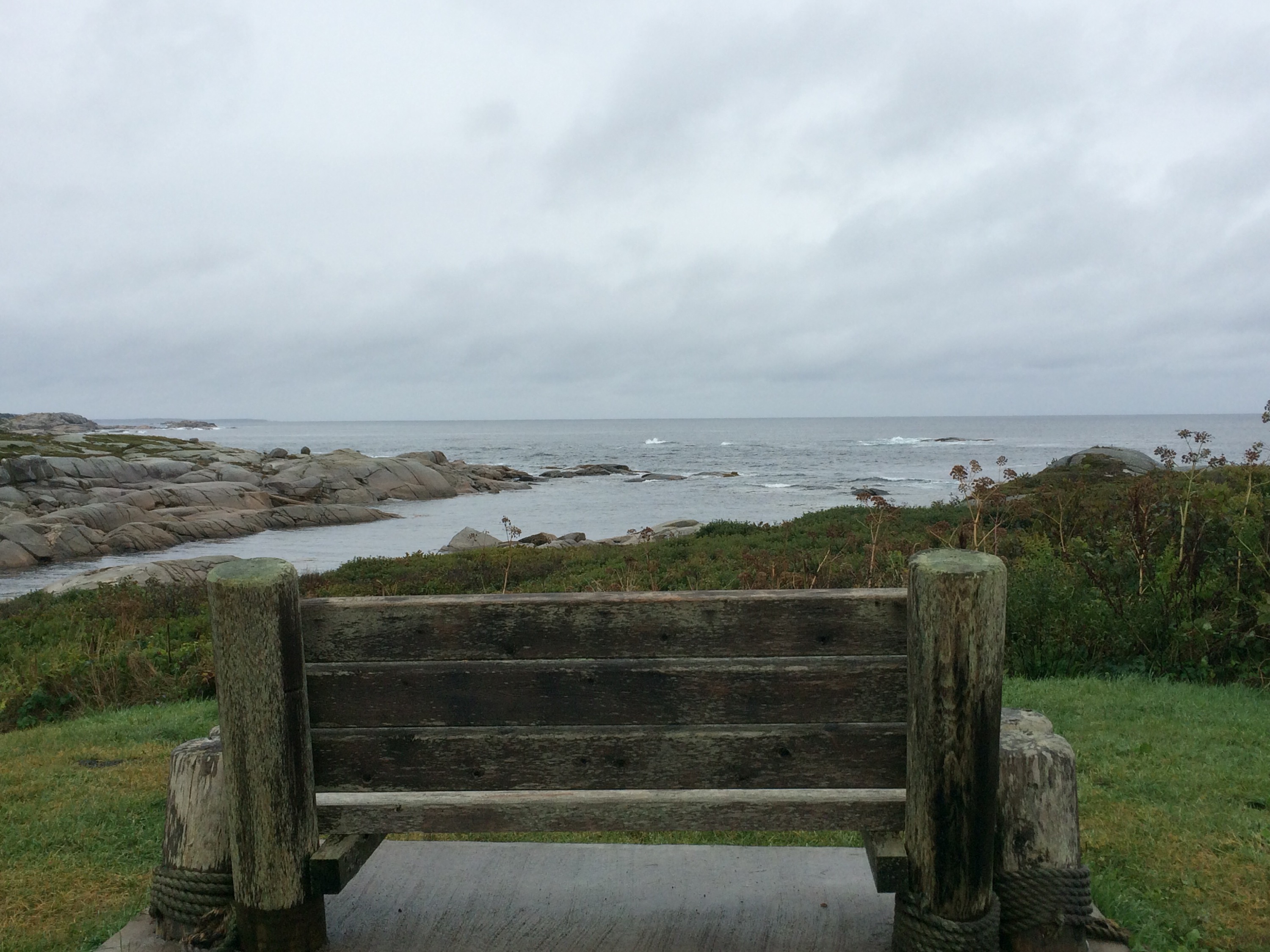
We almost overlooked a stunning view over the Atlantic Ocean, but I was so glad Sean noticed that there was something at the end of the Visitor Centre car park. It was a bench, perfectly placed for contemplation.
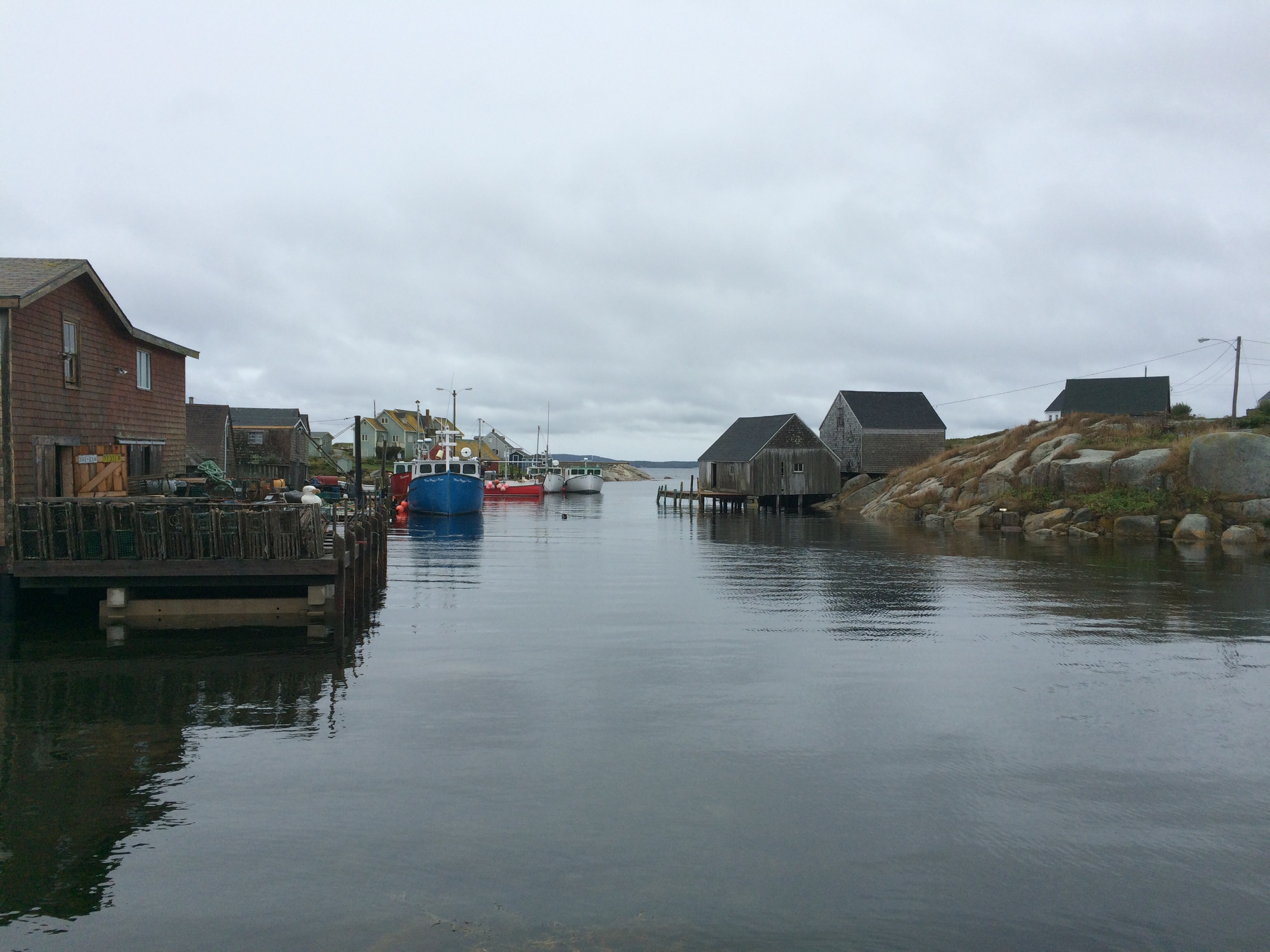
We turned our attention to the village itself, situated right on the cove. It’s incredibly pretty. Piers, boats, and typically maritime buildings combine to create a gorgeous view. It’s quite serene, despite the presence of numerous tourists and the cars and buses in which they arrived.
We proceeded up the hill to Peggy’s Point Lighthouse. Perched on a rocky outcrop, the lighthouse stands stark and white, capped with emphatic red, against the natural environment.
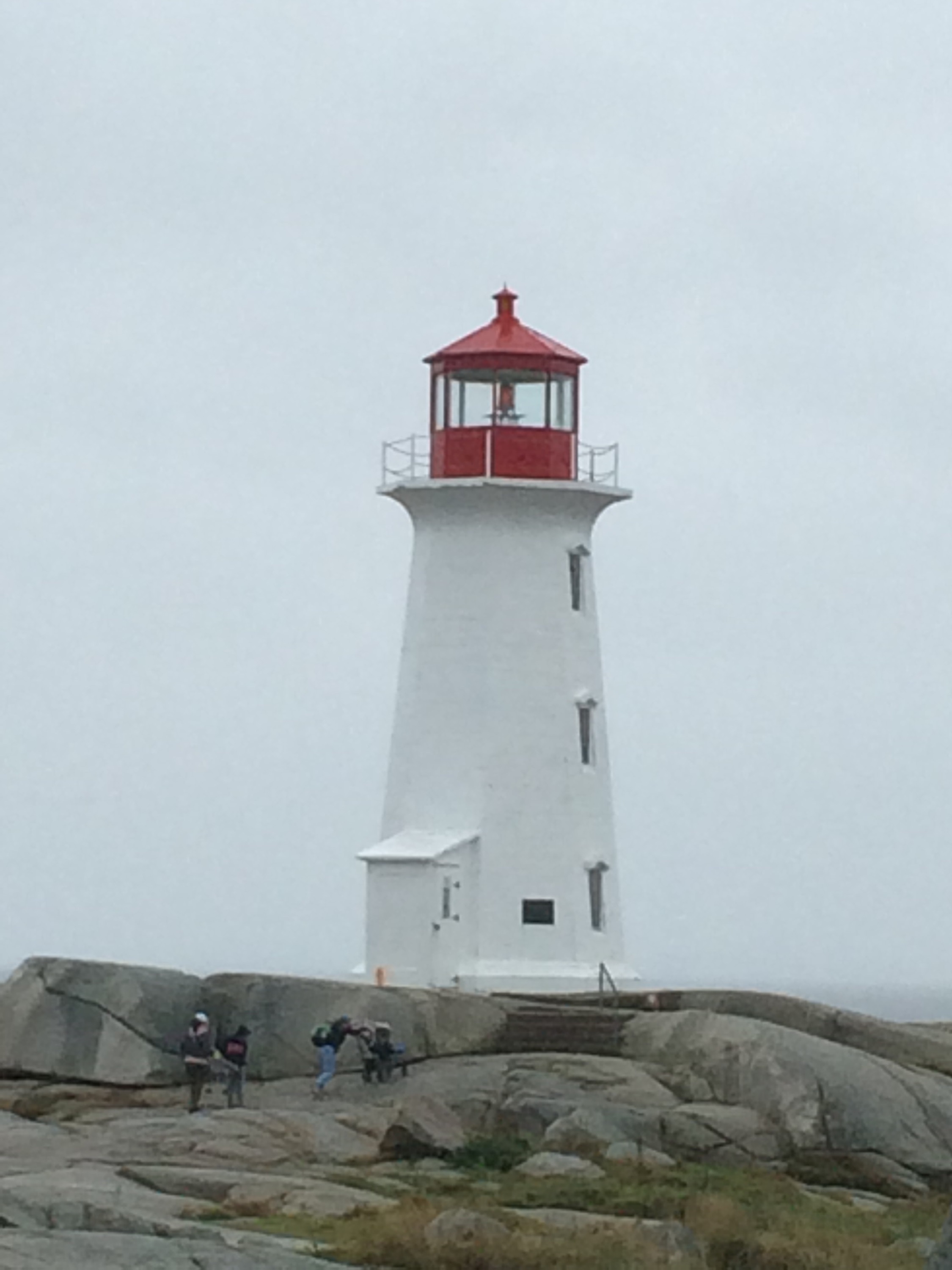
It is yet another magnificent view in this most beautiful place. Peggy’s Cove is highly memorable, and definitely worth the drive.
Driving from Halifax to Peggy’s Cove, we passed through several small bayside villages.
We drove into a village named Dover.
Sean said, “Give me some white cliffs!”
I responded with, “And some bluebirds!”
Best conversation so far today.
We landed in Halifax, Nova Scotia, this afternoon.
It’s raining, but I don’t really mind. The forecast for tomorrow says showers and some sun. I’m good with that, too.
We got to our hotel, only to discover there is no lift and we’re on the 4th floor. It’s a very good thing that the staff offered to bring our luggage upstairs for us, because my suitcase is heavy.
So, we ordered pizza and we’re just chilling for now. The window is open and I’m enjoying listening to cars driving in the rain.
The Irish Harp is a wonderful Irish pub in Niagara-On-The-Lake, Ontario.
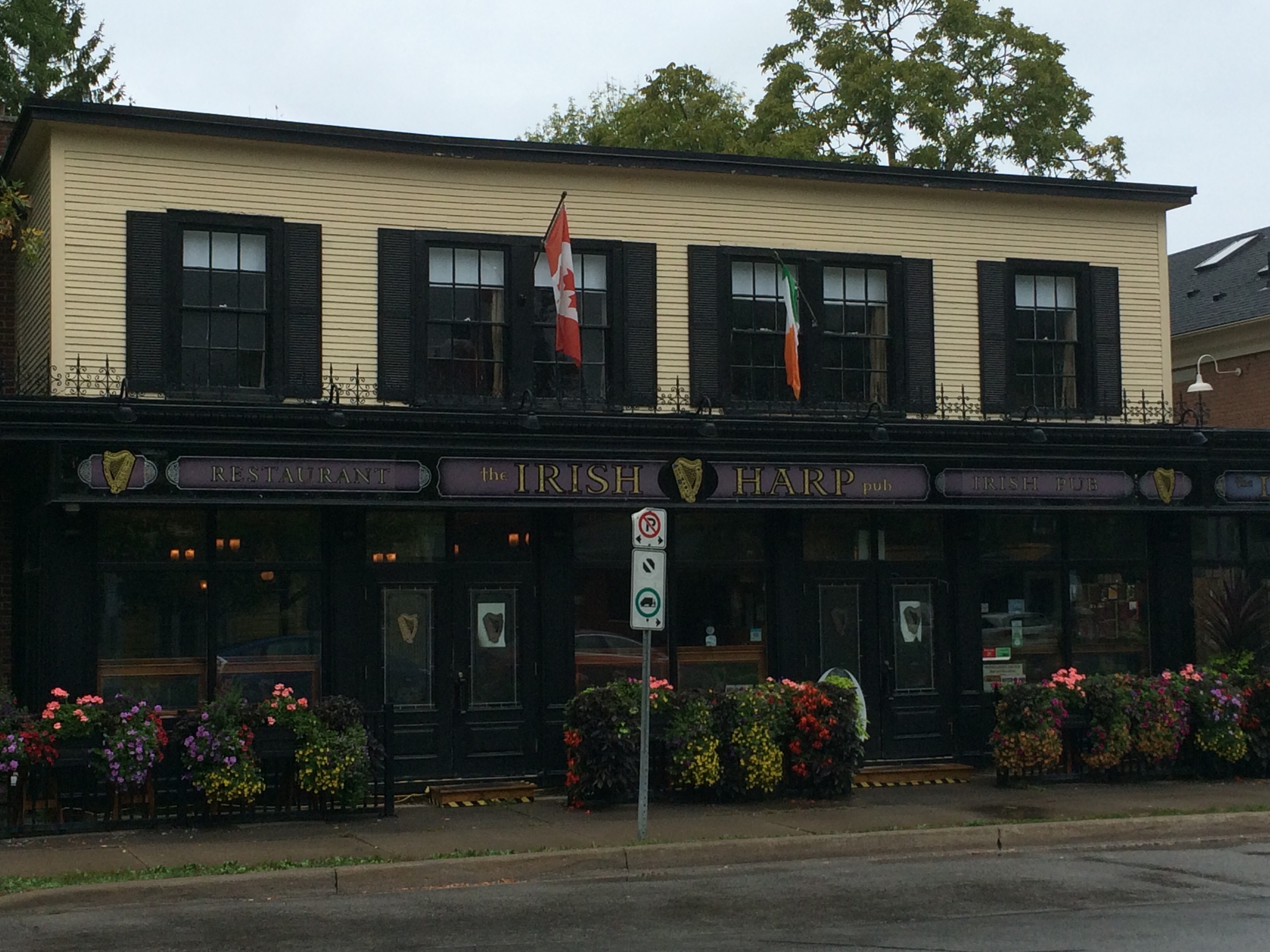
The atmosphere is warm and friendly, and right from the start, the service is outstanding.
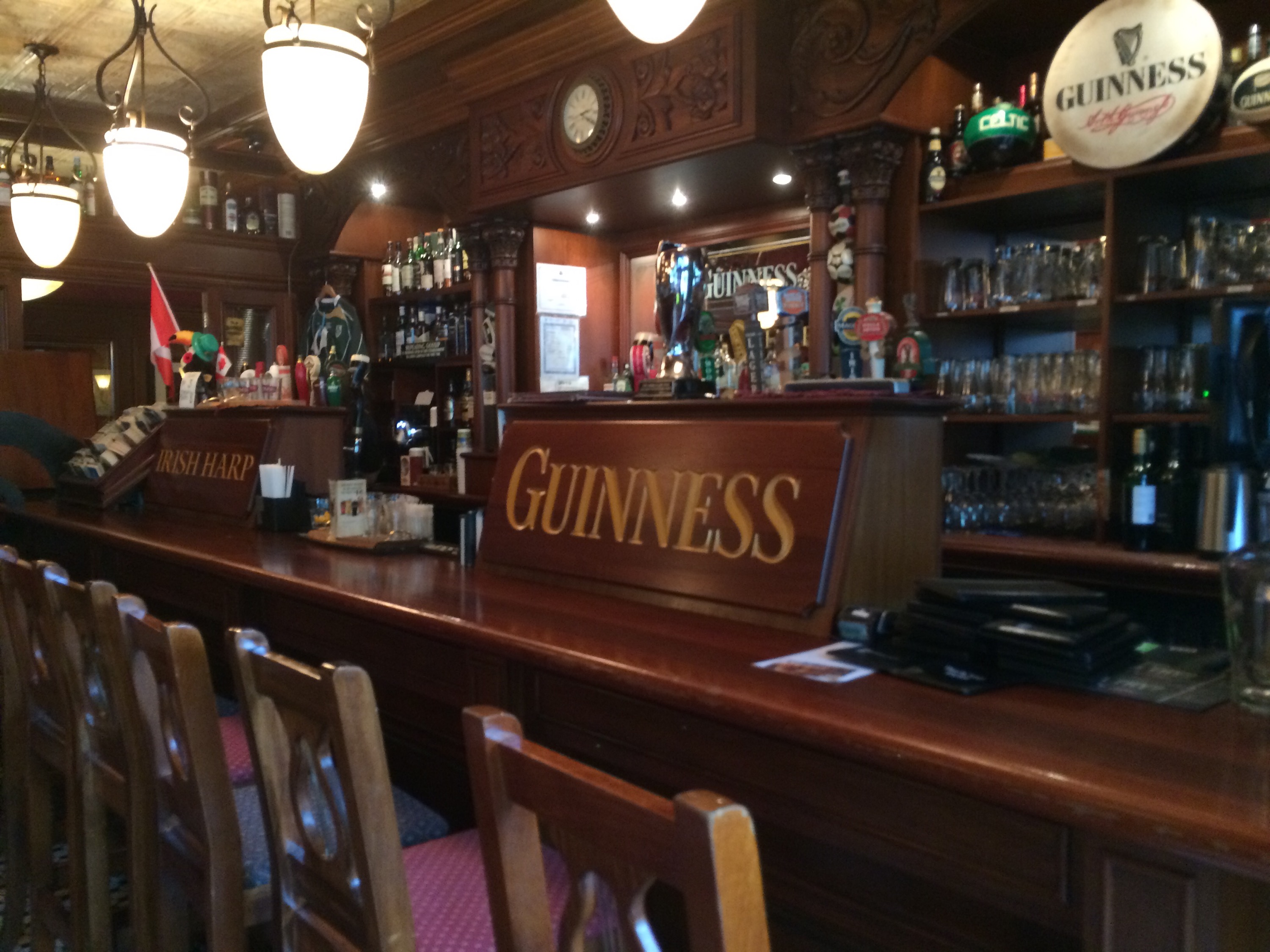
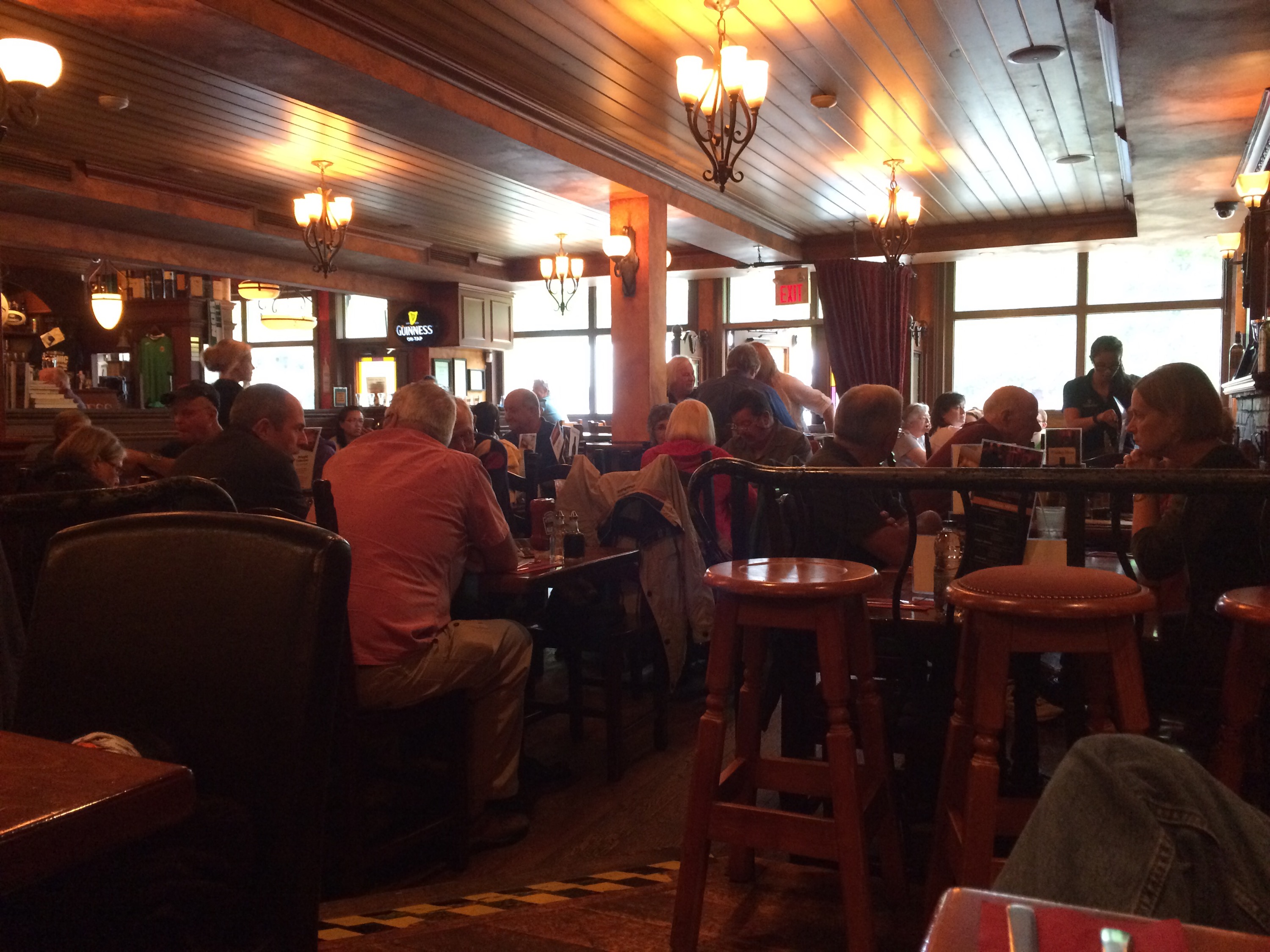
The food is good: there is an extensive menu of traditional Irish pub fare and more standard pub-style food with a slightly Irish twist.
The Magner’s cider is cold and delicious, and the house beer is pretty good, according to Sean. It’s fair to say that he knows and appreciates beer a great deal more than I do, so I’m happy to go with his opinion.
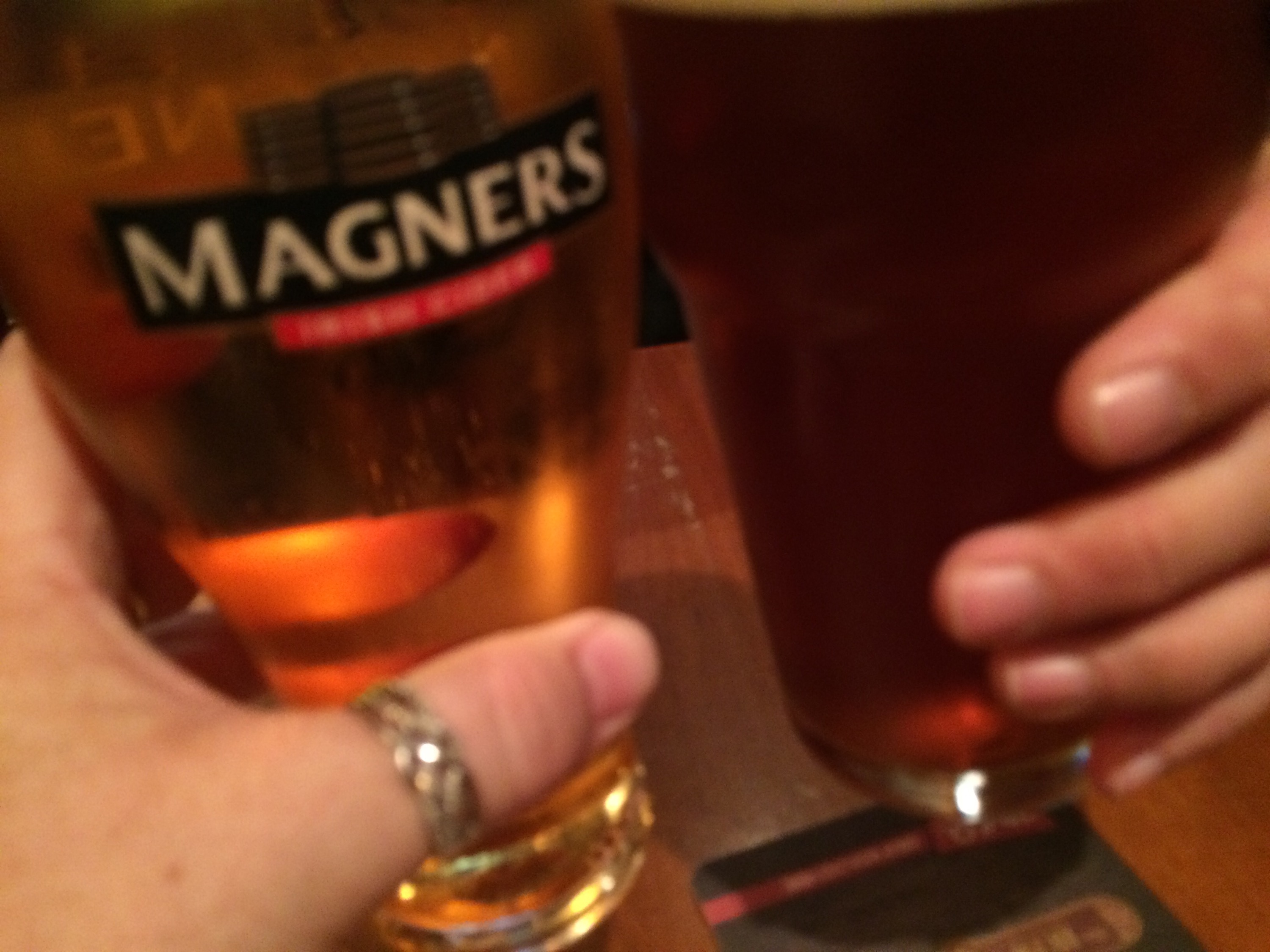
We really enjoyed our visit to the Itish Harp. I’d definitely make this my regular pub if I lived nearby.
I’ve had a few posts lately related to the War of 1812, so I thought I’d explain what it was all about for the benefit of anyone who is wondering.
The War of 1812 happened because the Americans decided they wanted to remove the British from the entirety of the North American continent. As a bonus, Canada would become part of the USA, and nobody there would ever spell correctly again.
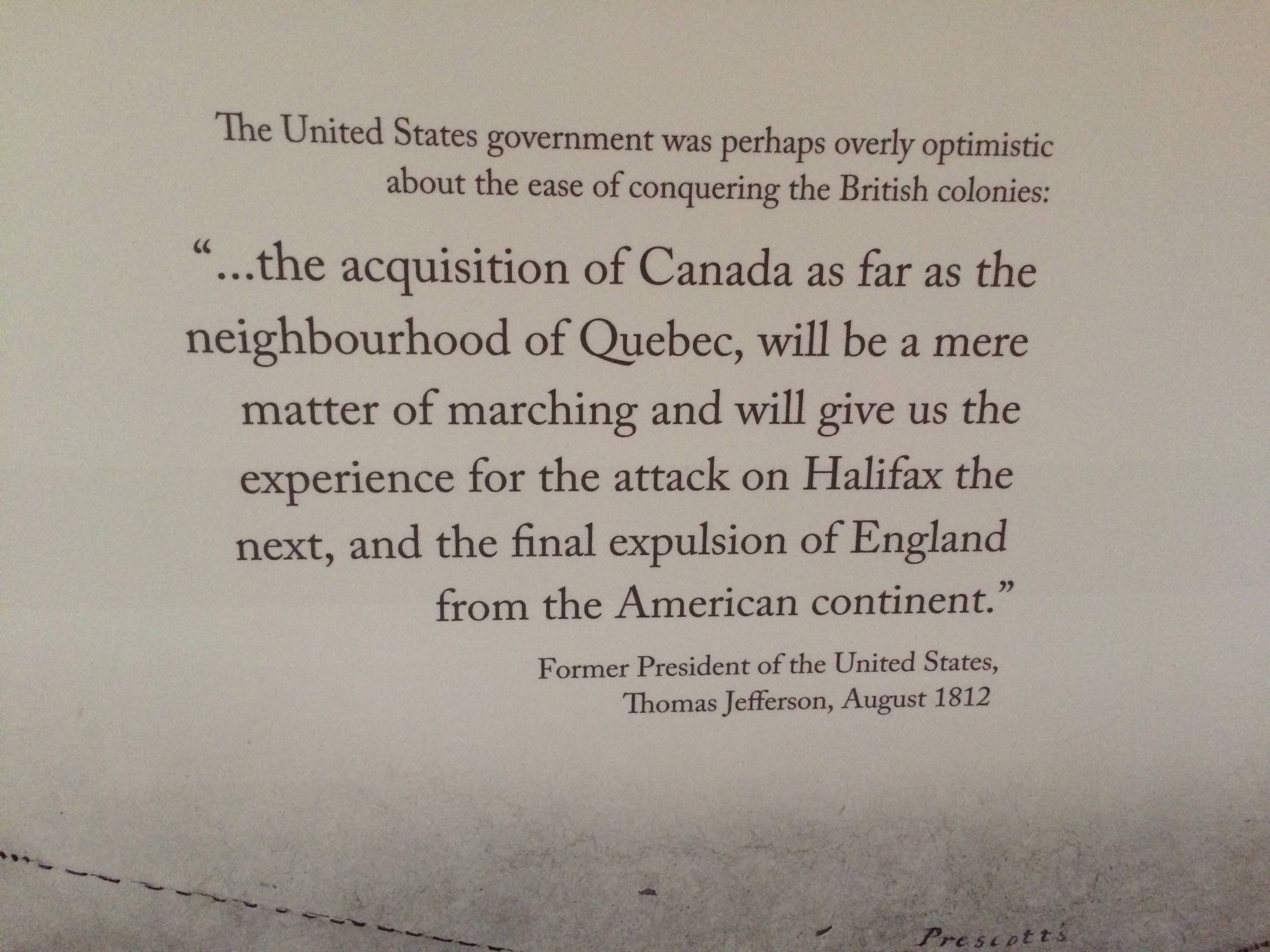
Neither Britain not Canada liked that idea, so they fought back and they won.
This means that Canada remained as part of the British commonwealth, and continued on America’s cooler, friendlier younger brother.
You’re welcome.
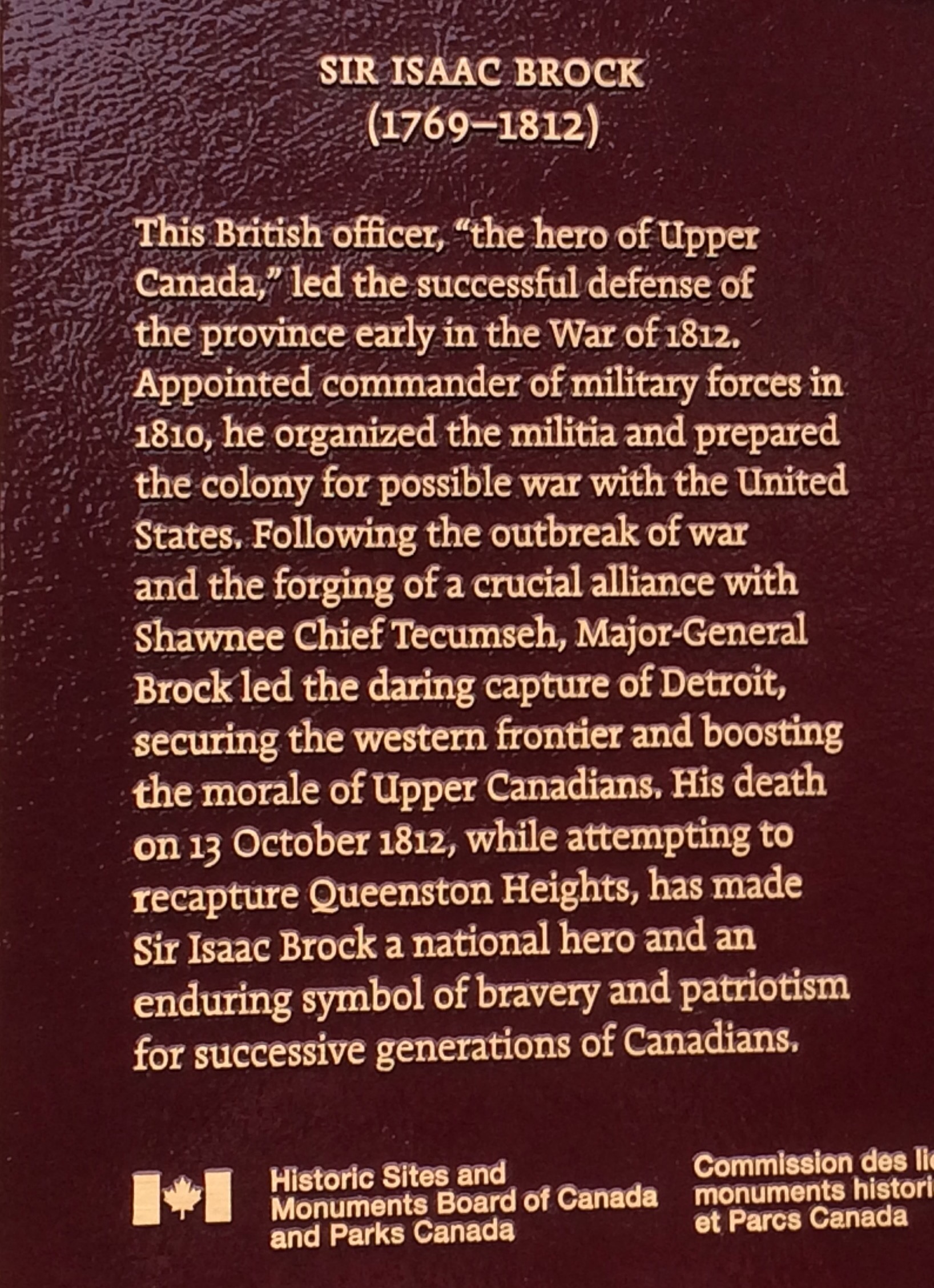
Major-General Sir Isaac Brock was a British military commander who was appointed as president of the executive council of Upper Canada. He probably was “the very model of a modern Major-General” in 1812 when war broke out between the British and the Americans, and Canada turned into a very conveniently placed battleground.
Brock had achieved an excellent outcome at Detroit, which involved getting the Americans under the command of Major-General Hull to surrender and hand over a bunch of really cool stuff, such as their fort, their soldiers, their weapons and ammunition, their supplies, and the territory of Michigan. Not a bad day’s work, when you stop to think about it.
In the Battle of Queenston Heights, the prize was control of the highly strategic Niagara River. If the Americans could win that, they would have a stranglehold on the Canadian supply lines.
The Americans attacked while Brock was asleep in bed at Fort George, but as soon as he was woken with the news, he bolted right over to Queenston Heights and led his forces with great bravery and determination.
Brock was shot in the chest and died without saying any of the brave words that have since been attributed to him. I suppose it’s hard to come up with something as poetic as “Push on, brave York volunteers” when you’re busy dying almost instantly from a great ripping wound in your chest.
He may have lost that particular battle, but thankfully the British and Canada won the war.
Brock was buried at Fort George, but in 1824 his remains were moved to a site at the top of Queenston Heights where stands a monument to his bravery, achievements and general derring-do.

At the base of this grand monument is a First Nations monument to the native people who fought in the battle. Tecumseh was a very strong ally of Isaac Brock and many people of the Original Nations fought alongside the British as loyal Canadians. Many of these Warriors were buried on this same hill at Queenston Heights.
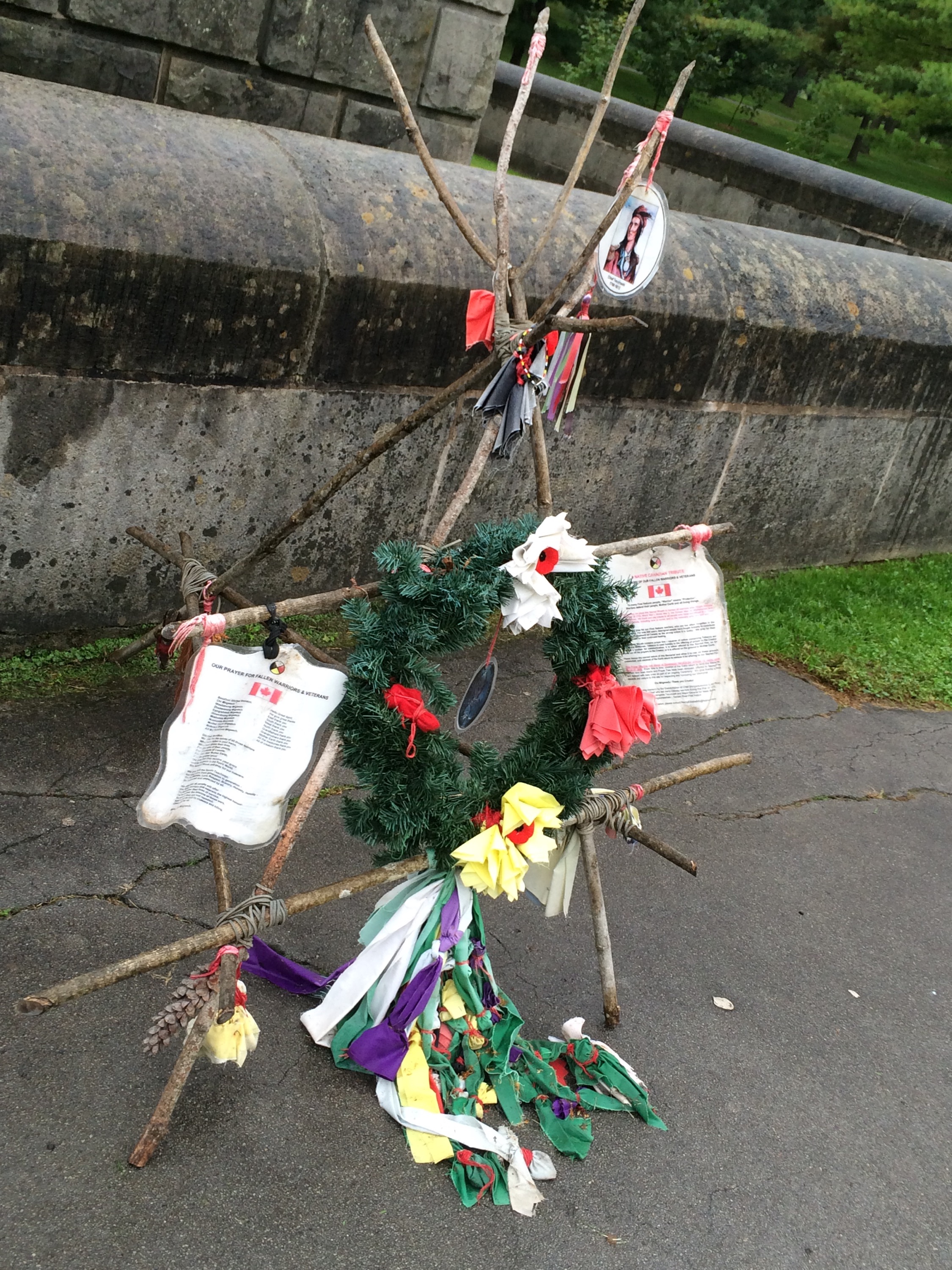
It’s not as grand as Brock’s memorial, but it is every bit as moving.
Laura Secord was an incredibly gutsy woman.
When she overheard plans by the Americans to attack the British soldiers defending Canada in the War of 1812, she walked almost 20 miles from her home in Queenston to warn them. She was determined to get the message to the British soldiers, under the command of Lieutenant FitzGibbon, at Beaver Dams, where the Americans planned to attack.
This was no walk in the park. It was over varied terrain in 19th century ladies’ shoes and clothing which, it may safely be assumed, were not designed for much other than drinking tea in parlours and visiting a shop or two on the odd occasion. She didn’t go by the main road, because she didn’t want to be stopped by more American soldiers. Even though she was afraid when she came upon a camp of Iroquois, she asked for directions and was pleased to find that they supported the British. She was even more pleased that a guide accompanied her to Decew House, where FitzGibbon and his men were in a meeting.
The message borne by Laura Secord made a huge difference in the outcome of the Battle of Beaver Dams. The British ambushed and defeated the Americans, and gladly took all the credit in their official reports. Laura Secord didn’t even get a mention.
Nice.
It is rather good, though, that her homestead has been preserved, and that there is a lovely monument to Laura Secord and her bravery in Queenston Heights Park.
I visited her homestead today, and was thrilled to find her monument when I went to see the monument to Isaac Brock, a key figure in the War of 1812 and the Battle of Queenston Heights.
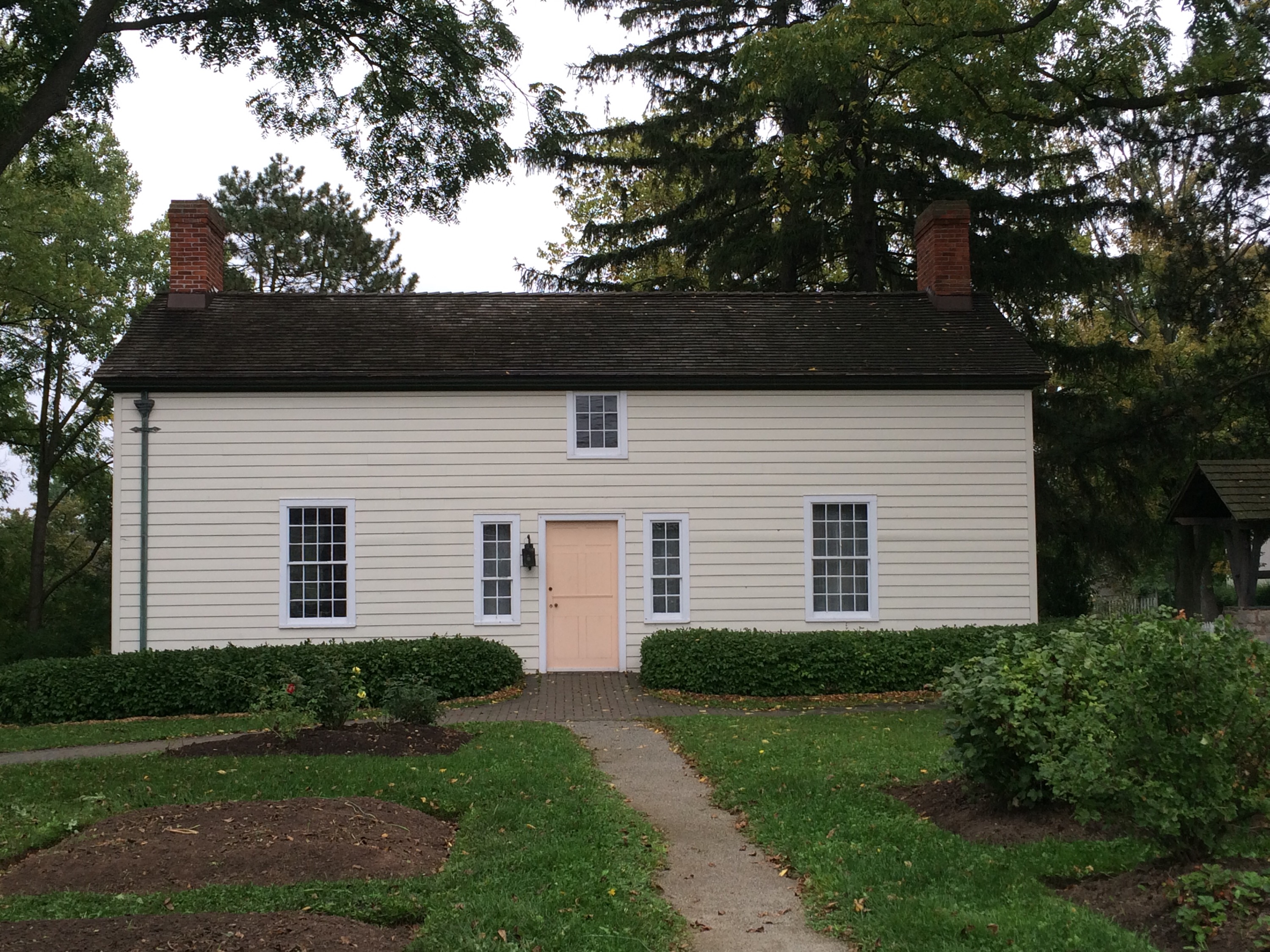
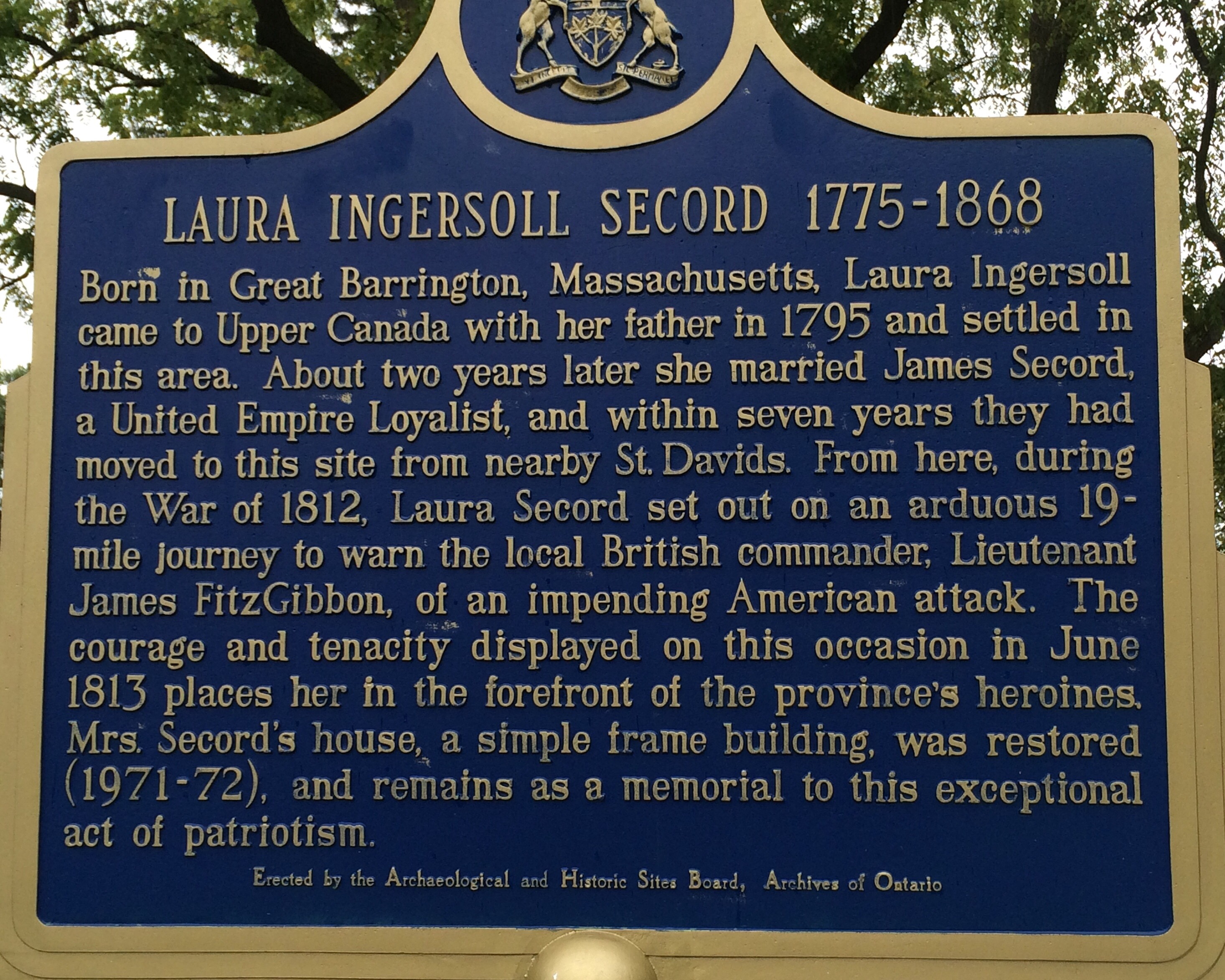
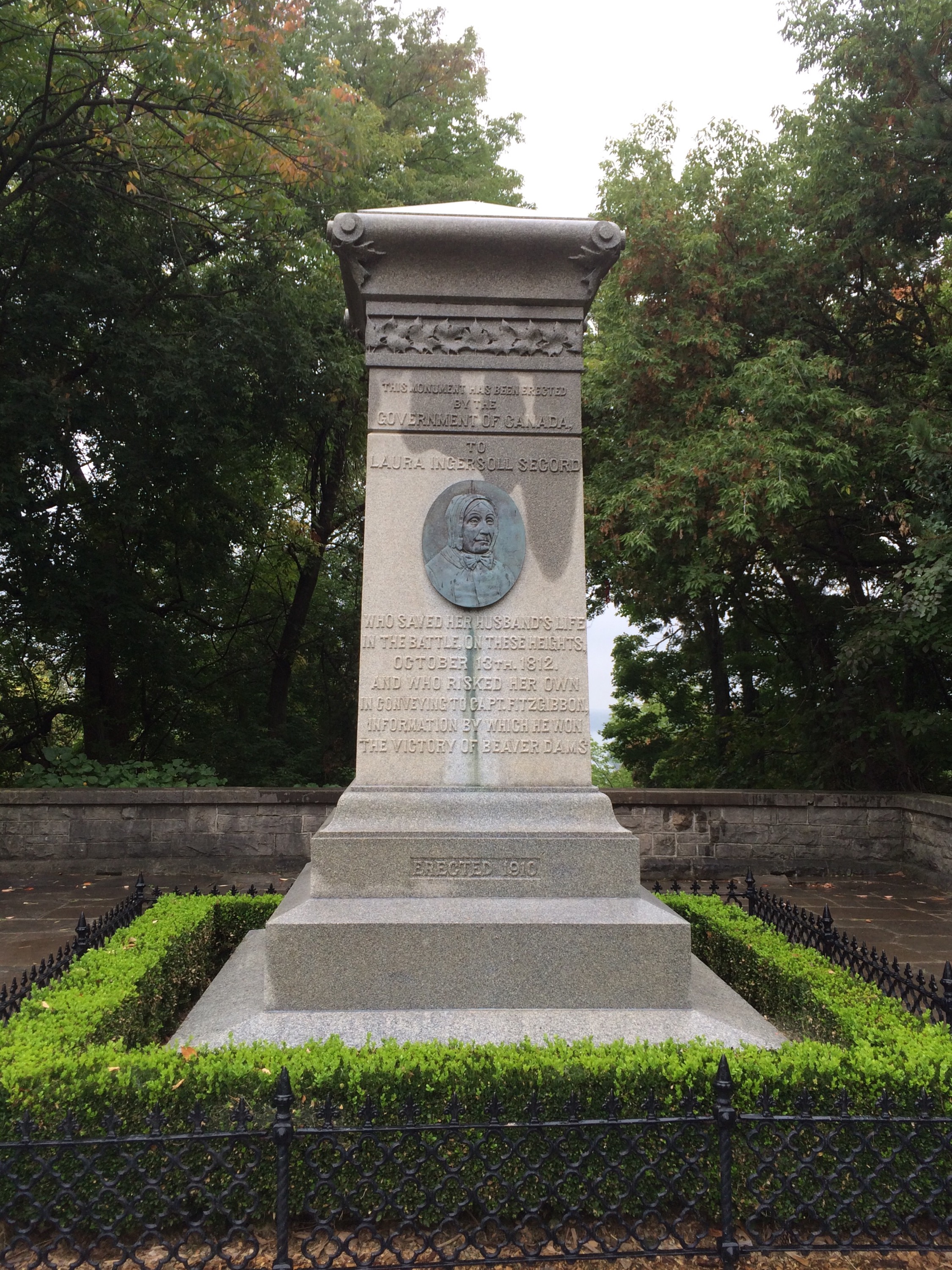
There is also a wonderful chain of chocolate stores named in her honour. The founder of Laura Secord Chocolates wanted her memory to be preserved and the story of her bravery to be told.
It’s a big ask, but I am willing to do my part in perpetuating the memory of this Canadian heroine.
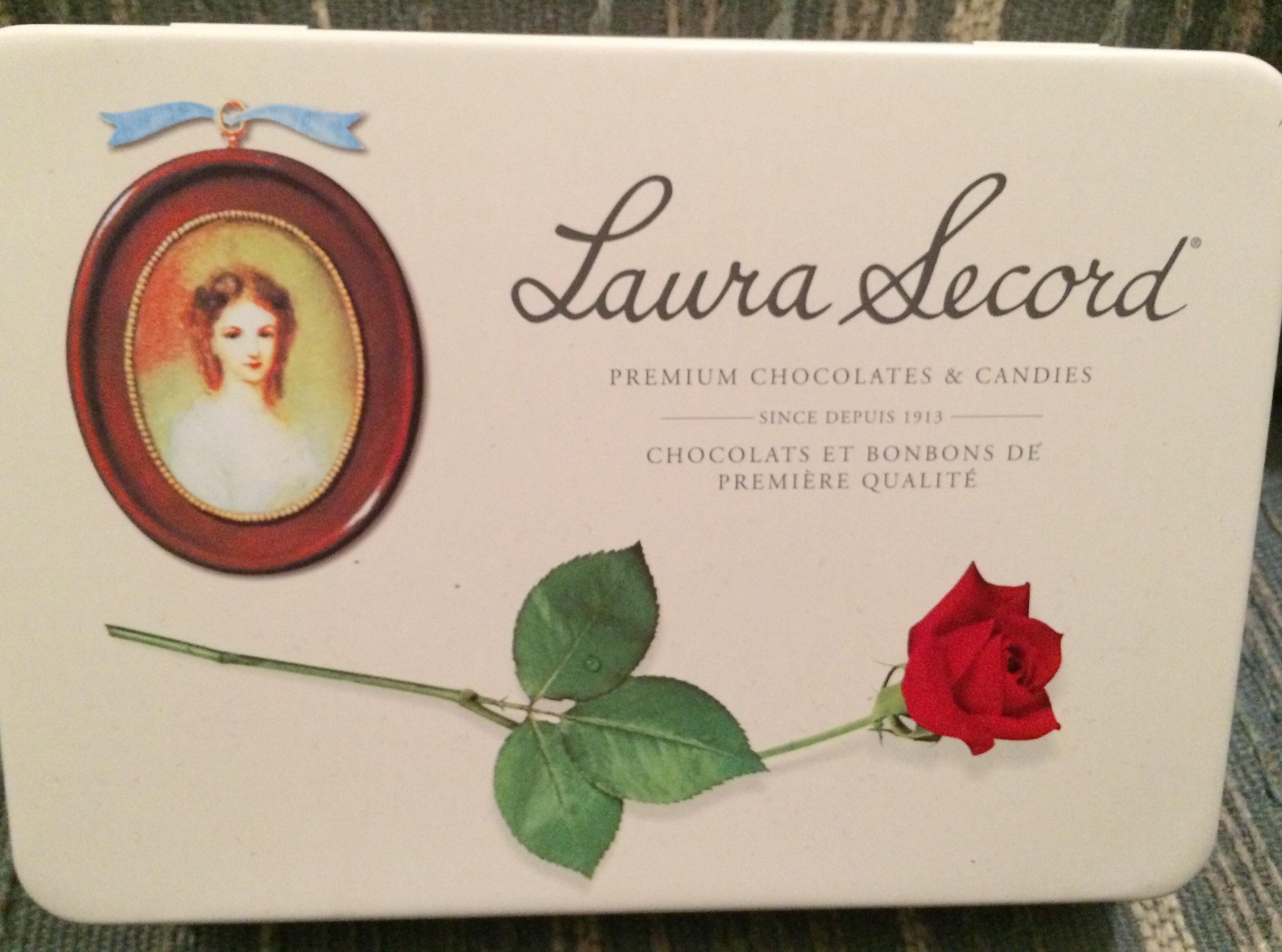
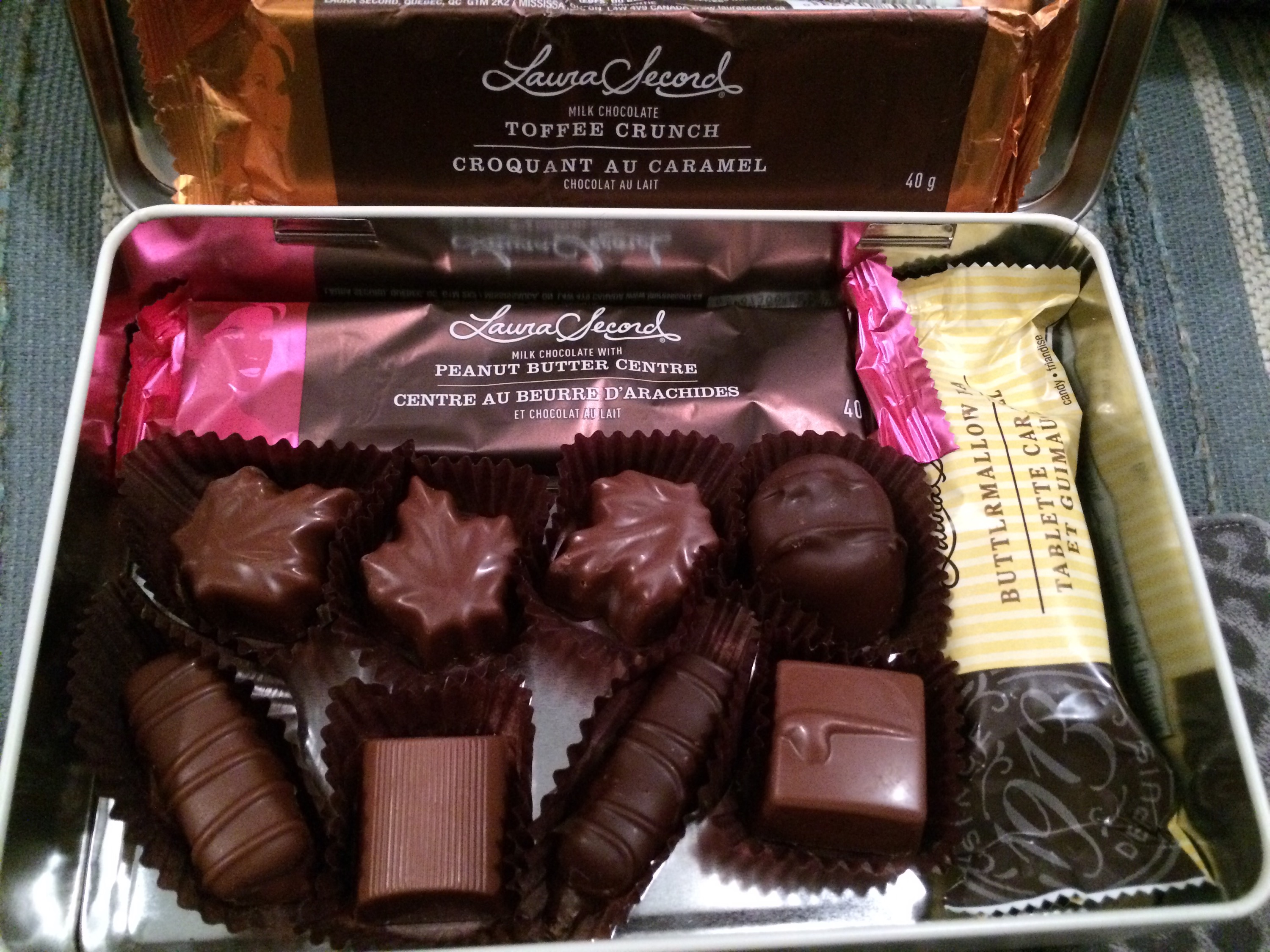
I’m calling it a patriotic duty.
It’s not unusual in Ontario to see a cross intersection with four-way stop signs.
That’s right.
Everyone has to stop, look at each other, smile, and say, “After you…” before proceeding on their way.
The first car to arrive gets to drive off first. In the rare event that you arrive in a dead heat, the driver to the left gets to go first. This makes me wonder, though… if the drivers are across the intersection from one another, are they not technically on each other’s left? I can just picture an “Ontario Stand Off”.
Driver A: “After you…”
Driver B: “No, after you…”
Driver A: “No, really, after you…” and so on.
In theory, this could continue for some time, given how nice and polite Canadians generally are.
On reflection, I can see why this has not been attempted in Australia.
 An Aussie Maple Leaf, adrift on the wind...